condensed milk flavor for dairy
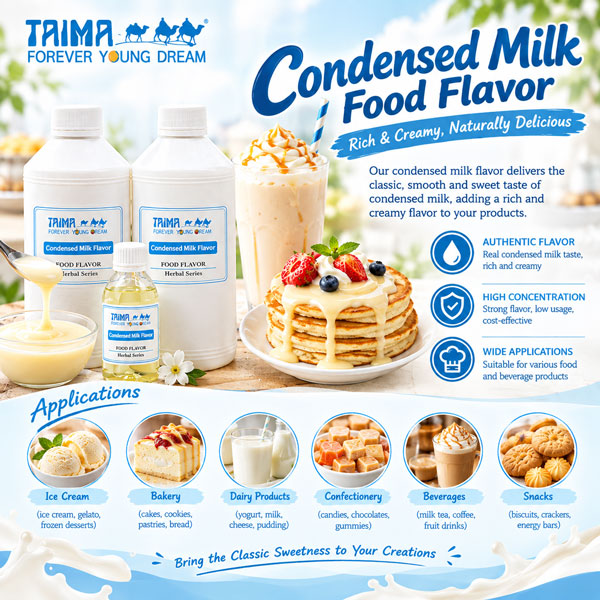
Condensed milk flavoring is primarily used to enhance the aroma of food products; its core function is to impart a rich, milky condensed milk flavor and a sense of sweetness, making it suitable for a wide range of applications.
1. Baked goods: Cakes, bread, cookies, pastries, fillings, etc., to enhance milky aroma and flavor complexity.
2. Dairy products and frozen treats: Ice cream, popsicles, yogurt, milk candies, dairy-based beverages, milk tea bases, etc.
3. Beverages and confectionery: Coffee creamers, powdered drink mixes, hard candies, gummies, chocolate, jelly, etc.
4. Other foods: Steamed buns, flour-based products, roasted snacks, seasonings, meat products, etc., can also be flavored with it.
Why Choose our Condensed milk flavor for candies
1. Restoring and enhancing natural flavors: They compensate for the loss of natural aromatics during processing steps such as sterilization and concentration. For instance, adding orange flavoring to orange juice drinks can restore the fresh, full-bodied taste of freshly squeezed juice and accentuate the characteristic aroma of the fruit pulp.
2. Stabilizing flavor quality across batches: They counteract flavor variations in natural ingredients caused by factors like origin, season, or ripeness, ensuring consistent aroma and taste in every production batch.
3. Masking undesirable off-notes:They neutralize the beany notes in plant-based protein drinks, the bitter aftertaste in low-sugar or sugar-substitute beverages, and the bitterness of vitamins and electrolytes in functional drinks, thereby significantly improving palatability.
4. Overcoming flavor limitations: They replicate the flavors of rare or expensive ingredients (such as mangosteen or durian) or exotic profiles that are difficult to extract directly (such as cherry blossom or pandan). This allows beverage products to transcend seasonal and supply-chain constraints, expanding the boundaries of flavor possibilities.
5. Creating innovative, complex flavor profiles: They harmonize contrasting flavor notes-such as fruit, tea, milk, and herbs-to create popular, multi-layered blends like peach oolong or lemon-mint.
Food Additives of Condensed milk flavor(Core Applications)
1.Beverages and Dairy Products: Imbues fruit juices, tea drinks, prepared wines, carbonated beverages, yogurt, and ice cream with complex fruity aromas.
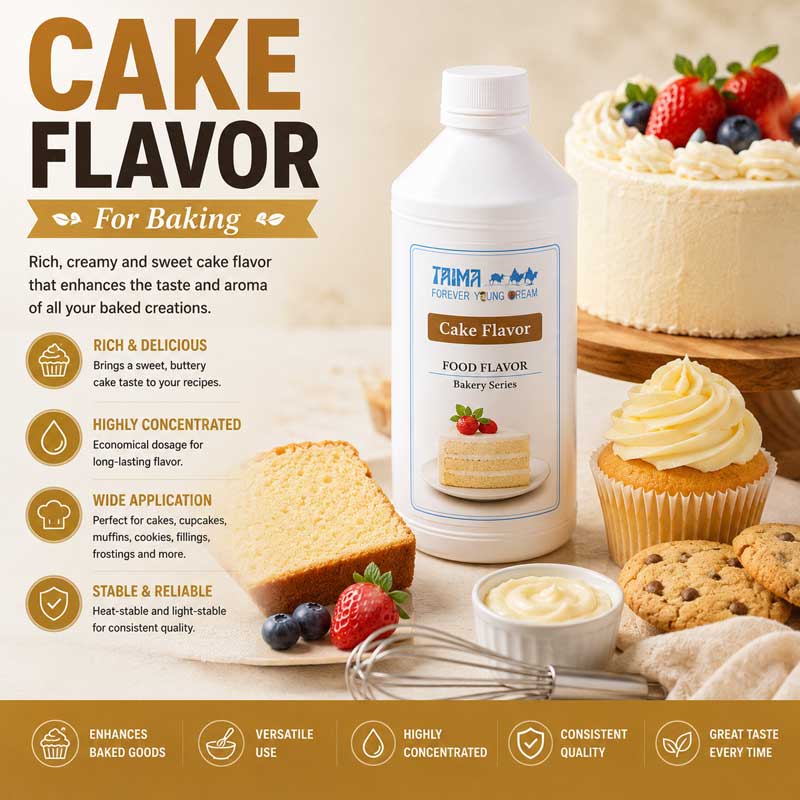
2. Baking and Confectionery: Used in cakes, biscuits, chocolates, hard candies, soft candies, jellies, and chewing gum.
3. Flavoring and Functional Foods: Used in jams, sauces, prepared dishes, instant tea, and fortified foods.
Daily Chemicals and Industrial Applications
1. Cosmetics/Personal Care Products: Perfumes, face masks, powder compacts, shower gels, etc., adding a unique matcha aroma.
2. Household Products: Scented candles, air fresheners, etc.
3. Others: Some cleaning agents and paints also contain small amounts to provide a refreshing matcha aroma; there are also small-scale experimental applications in the chemical and textile industries.
Specifcation of Food Flavor
- Products Name: Condensed milk flavor
- Application: for beverages, baking, candies, dairy...
- Solubility: water-soluble, oil-soluble, water-oil-soluble
- Appearance: liquid/powder
- Storage Conditions: seal, cool, dry without sunlight
- Shelf Life: 2years under proper storage
- Flavor type
1)Water-soluble fragrance;
2) Oil-soluble essence;
3)Powder aroma;
4)Emulsified flavour
5)Paste flavor;
Advantages Of Food Flavors:
I. Optimizing Food Flavor
1. High and Low Temperature Resistance: Frying, baking, and freezing do not affect the stability of the flavoring.
2. Imbuing Rich Flavors: Many processed foods have bland base flavors; adding food flavorings can create a variety of pleasant aromas (such as fruity or nutty flavors), satisfying consumers' diverse flavor preferences.
3. Compensating for Flavor Defects: Foods easily lose their natural aromas during processing, transportation, and storage. Flavorings can replenish and improve aromas, and also mask unpleasant odors generated during processing, enhancing overall quality.
4. Stabilizing Aroma Quality: Flavorings are formulated according to a uniform recipe, ensuring consistent aroma across batches and preventing fluctuations in the flavor of natural ingredients from affecting the finished product's taste.
II. Value to the Food Industry
1. Reducing Production Costs: Compared to directly using natural ingredients for flavoring, food flavorings are lower in cost, require very small amounts, are more suitable for large-scale industrial production, and can also solve the problem of seasonal shortages of some natural ingredients.
2. Facilitate Product Innovation: It can flexibly formulate complex flavors that are difficult to achieve with natural ingredients (such as mixed fruit flavors and trendy innovative flavors), helping companies develop new products and enhance product added value and market competitiveness.
3. Adapt to Special Processing Needs: Different dosage forms of flavorings (powder, water-soluble, oil-soluble, water-oil soluble, etc.) can be adapted to different processes such as baking and high-temperature sterilization, extending the aroma retention during the product's shelf life.
III. Safety Advantages of Compliant Use:
Strictly complying with the "National Food Safety Standard - Standard for the Use of Food Additives" (GB 2760-2024) ensures food safety and will not impose additional burdens on health.
IV. Recommended Dosage our flavor flavor:
The recommended dosage varies depending on the type of flavoring:
Water-based flavorings: 0.07%-0.15%;
Oil-based flavorings: 0.2%-0.3%
Emulsified flavorings: 0.05%-0.12%;
Powdered solid beverages: 0.08%-2%Precautions for Use of Food flavoring
| (1) | Stir thoroughly after adding to ensure even distribution. |
| (2) | It is recommended to add it at the final stage of the production process, as high temperatures may cause some aroma loss. |
| (3) | After the finished product is made, seal and store at a low temperature to prevent aroma loss. |
| (4) | Concentrated flavoring is a food additive and cannot be consumed directly; it can only be added to baking ingredients. |
Food flavor package
1.Shipment:
Door to Door service by FedEx/TNT/DHL
2.payment method:
PayPal, T/T, W/U; Alibaba; Bank transfer...
3.Time delivery:
3 days after we gentting payment;
4.Packing:
First,Fluorinated bottles/bags first;
Next packed by Chunky Aluminium foil bag;
Then in carton box;
Frequently Asked Questions
Everything you need to know about our food flavor solutions.
Contact Veivy for a Quote
Ready to enhance your product's taste? Get in touch today!
Contact on WhatsAppTaima supply Raw materials for more than since 2008:
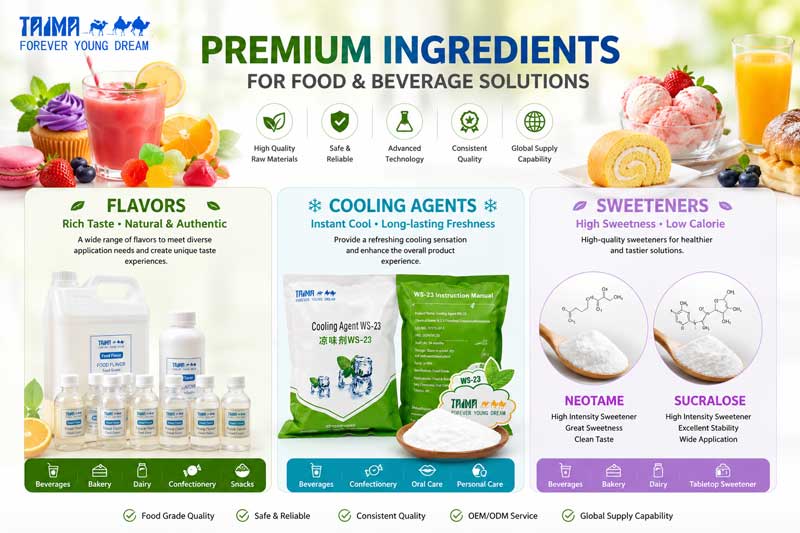
1. Concentrate flavors: Tobacco flavors, Fruit flavors, Mint flavors, mixed flavors...for e-liquid vape juice.
2. Powder cooling agents: WS-23, WS-3,WS-5, WS-27, WS-12...
3. powder sweeteners: Neotame, Sucralose, Advantame...
4. Other additaves: Sour,Ethyl Malto other enhancer...
Food-Grade Condensed Milk Flavor for Candies
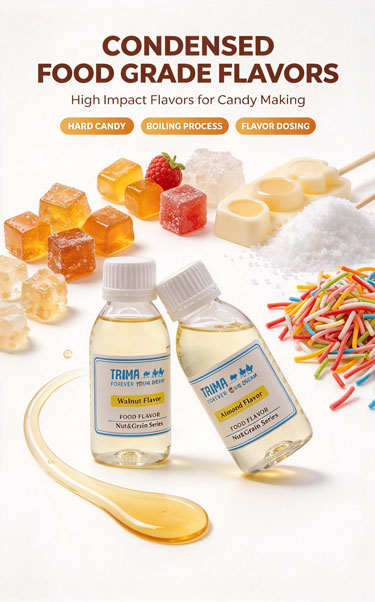
Condensed Milk Flavor is a food-grade flavoring designed to provide candies and confectionery products with a rich, creamy, and sweet milk aroma. It can reproduce the smooth sensory profile of condensed milk and is suitable for hard candies, soft candies, gummies, milk candies, chocolate fillings, and other confectionery applications. Taima provides concentrated flavor solutions in different forms, including liquid, powder, water-soluble, and oil-soluble options, depending on the production process and formulation requirements.
Food Grade Condensed Milk Flavor for Candies:
Condensed Milk Flavor is a concentrated food-grade flavoring specially developed for confectionery and candy applications. It provides a creamy, sweet and milky aroma similar to condensed milk, helping manufacturers create a richer and more attractive flavor profile in finished products.
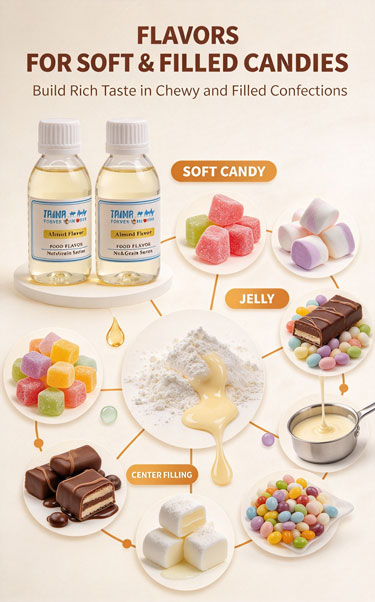
Condensed milk flavor is suitable for many types of confectionery, including hard candies, soft candies, gummies, milk candies, toffees, caramel products, chocolate fillings and dessert-style confectionery. It can also be combined with vanilla, caramel, chocolate, coffee, and fruit flavors to develop customized flavor profiles.
Why Use Condensed Milk Flavor in Candy?
Candy formulations often require a stable and recognizable flavor during processing and storage. Natural dairy ingredients may increase formulation complexity and can be affected by processing conditions. A concentrated flavoring provides a convenient way to introduce a consistent creamy milk aroma while using a relatively small amount.
Condensed Milk Flavor can help:
• Enhance creamy and milky aroma
• Improve the overall flavor profile of candies
• Provide consistent flavor from batch to batch
• Reduce the amount of dairy ingredients required for flavor enhancement
• Create milk, cream and condensed-milk style confectionery products
• Work with other sweet and dessert
flavorsFormulation Advantages
- High-purity concentrate with potent aromatic strength
- Excellent solubility for seamless incorporation
- Stable in various pH and processing conditions
- Food-grade quality meeting international standards
Application Scope
Suitable for beverages, dairy products, baked goods, confectionery, snacks, and nutritional products. Adaptable to both water-phase and oil-phase formulations.
Why Choose Our Food-Grade Flavor
I. Flavor Optimization Advantages
1. Enhanced Milk Aroma:
As an excellent flavor enhancer, it significantly improves the milk aroma of dairy products, resulting in a richer and more intense flavor.
2. Harmonized Flavor Layers:
Its inherently mellow, malty sweetness makes the overall aroma of dairy products smoother and richer, harmonizing any rough flavor profiles.
3. Masking Undesirable Flavors:
Effectively suppresses bitterness and the sharp acidity from fermentation in dairy products, resulting in a smoother and more palatable taste.
II. Cost and Formulation Advantages
1. Reduced Sugar Costs:
It synergistically enhances the sweetness of dairy products, reducing the amount of sucrose added while maintaining a sweet experience, thus optimizing formulation costs.
2. Strong Flavor Stability:
Suitable for high-temperature sterilization and fermentation processes in dairy products, it exhibits good thermal stability, preventing flavor loss during processing.
Keyword of Food-grade flavors:
Condensed Milk Flavor, Concentrated Flavor for candies, Baking Flavor, Food Flavoring, dairy Flavor, Cookie Flavor, Biscuit Flavor, Bakery Flavor, Liquid Food Flavor, Concentrated Food Flavor, Cake Flavoring, Bakery Flavoring, Food Flavor Manufacturer, Bulk Food Flavor, OEM Food Flavor, Custom Baking Flavor
Global Supplier You Can Trust
Xi’an Taima operates an advanced flavor production facility with a 1000+ product portfolio. We offer competitive factory pricing, free samples, COA/TDS documentation, and worldwide logistics. Inquiries are welcome from distributors and manufacturers.
Welcome to try our samples and request more information; please contact:
WhatsApp:+8618710936996 Email: Veivy@taimacn.com