
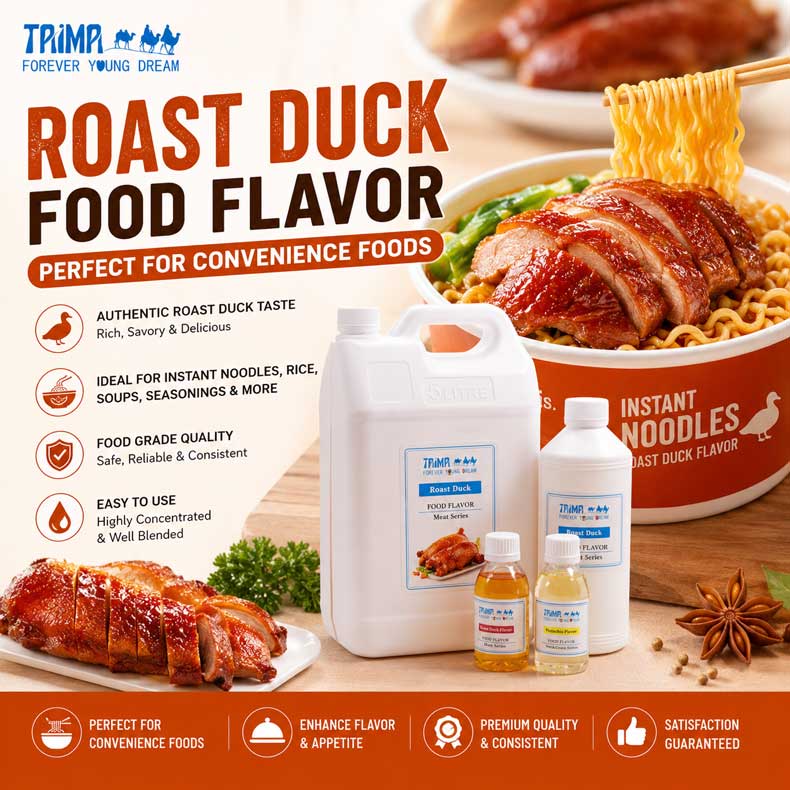
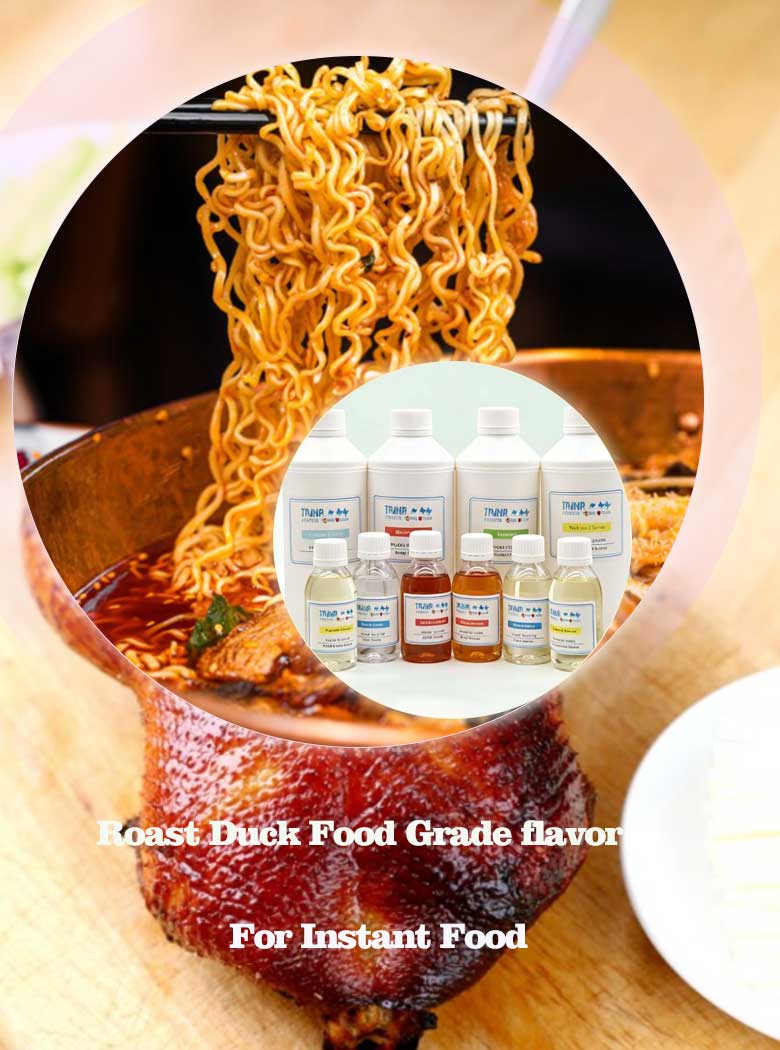
Roast Duck Concentrate Liquid Food Flavor Fish Meat Fragrance for Instant Food
Roast duck flavoring, a subcategory of meat flavorings, can be used to enhance the flavor of convenient ready-to-eat foods, compensating for the loss of roast duck flavor during processing:
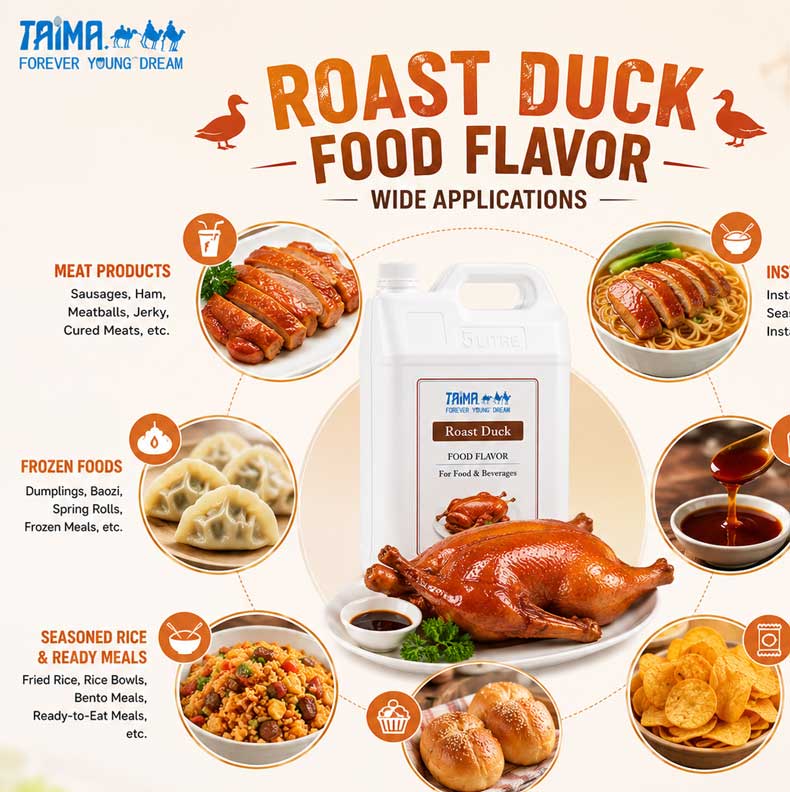
I. Core Application Areas* Roast duck flavoring packets for instant noodles/powders, used to enhance the roast duck aroma in the broth;
* Pre-packaged braised duck feet, braised duck necks, and other ready-to-eat braised foods, supplementing the duck meat aroma and masking any off-flavors;
* Roast duck flavored puffed snacks, instant soup bases, and frozen ready-to-eat meals, improving the overall flavor realism;
* Flavoring packets for ready-to-eat duck rice and self-heating hot pot, quickly imparting a rich, characteristic roast duck aroma to the product.
II. Recommended Dosage:Puffed foods: Add 0.5%~2% of the finished product weight;
Instant soup/seasoning powder: Add 1%~4% of the finished product weight;
Instant meat products: Add 0.1%~0.5% of the finished product weight;
For regular instant duck products, the recommended dosage is approximately 0.05%, with 500 grams of flavoring suitable for 2000 catties of raw materials.
The core advantages of powdered food flavorings:
1. Strong compatibility:Can be directly mixed with powdered ingredients such as flour and powdered sugar, dispersing evenly in powdered foods such as cakes and solid beverages. Easy to use, and also provides a small amount of dietary fiber.
2. Excellent stability:Effectively prevents flavor oxidation and volatilization, exhibits outstanding high-temperature resistance, can withstand high-temperature processing such as baking, and retains aroma for a longer time, extending product shelf life.
3. High concentration and easy storage:The flavoring components are highly concentrated; only a small amount is needed to achieve the desired flavor. It contains no pigments or preservatives, and the solid form prevents leakage, making transportation and storage easier and controlling costs.
4. Stable flavor performance:Unaffected by fluctuations in the quality of fresh ingredients, it provides a consistent aroma to food, avoiding inconsistent flavor.
Food Additives (Core Applications)
I. Duck Meat Product Processing:Used in the marinating process of various duck products such as roast duck;
Cantonese roast duck;
hand-shredded duck;
sizzling duck;
braised duck;
and preserved duck.
Also applicable to braised duck necks, braised duck, and duck offal.
II. Catering and Home Cooking:Used to flavor duck broth and duck dishes, quickly replenishing the charred aroma lost during roasting.
When making roast duck at home, a small amount of flavoring can be mixed into the marinade.
Specifcation of Food Flavor
- Refractive index: 80-120
- Purity: 99%
- safaty healthy
- Composition: essence = Base + taste (fragrance/flavors)
- Addition ratio: 0.05%~0.3%
- Flavor type
1) Nature synthesis Flavor (Best-selling );
2) Natural extraction flavoring;
3) synthetic flavor.
Advantages Of Food Flavors:
I. Optimizing Food Flavor
1. High and Low Temperature Resistance: Frying, baking, and freezing do not affect the stability of the flavoring.
2. Imbuing Rich Flavors: Many processed foods have bland base flavors; adding food flavorings can create a variety of pleasant aromas (such as fruity or nutty flavors), satisfying consumers' diverse flavor preferences.
3. Compensating for Flavor Defects: Foods easily lose their natural aromas during processing, transportation, and storage. Flavorings can replenish and improve aromas, and also mask unpleasant odors generated during processing, enhancing overall quality.
4. Stabilizing Aroma Quality: Flavorings are formulated according to a uniform recipe, ensuring consistent aroma across batches and preventing fluctuations in the flavor of natural ingredients from affecting the finished product's taste.
II. Value to the Food Industry
1. Reducing Production Costs: Compared to directly using natural ingredients for flavoring, food flavorings are lower in cost, require very small amounts, are more suitable for large-scale industrial production, and can also solve the problem of seasonal shortages of some natural ingredients.
2. Facilitate Product Innovation: It can flexibly formulate complex flavors that are difficult to achieve with natural ingredients (such as mixed fruit flavors and trendy innovative flavors), helping companies develop new products and enhance product added value and market competitiveness.
3. Adapt to Special Processing Needs: Different dosage forms of flavorings (powder, water-soluble, oil-soluble, water-oil soluble, etc.) can be adapted to different processes such as baking and high-temperature sterilization, extending the aroma retention during the product's shelf life.
III. Safety Advantages of Compliant Use:
Strictly complying with the "National Food Safety Standard - Standard for the Use of Food Additives" (GB 2760-2024) ensures food safety and will not impose additional burdens on health.
IV. Recommended Dosage our flavor flavor:
The recommended dosage varies depending on the type of flavoring:
Water-based flavorings: 0.07%-0.15%;
Oil-based flavorings: 0.2%-0.3%
Emulsified flavorings: 0.05%-0.12%;
Powdered solid beverages: 0.08%-2%Precautions for Use of black tea flavoring
| (1) | Stir thoroughly after adding to ensure even distribution. |
| (2) | It is recommended to add it at the final stage of the production process, as high temperatures may cause some aroma loss. |
| (3) | After the finished product is made, seal and store at a low temperature to prevent aroma loss. |
| (4) | Matcha flavoring is a food additive and cannot be consumed directly; it can only be added to baking ingredients. |
Food flavor package
1.Shipment:
Door to Door service by FedEx/TNT/DHL
2.payment method:
PayPal, T/T, W/U; Alibaba; Bank transfer...
3.Time delivery:
3 days after we gentting payment;
4.Packing:
First,Fluorinated bottles/bags first;
Next packed by Chunky Aluminium foil bag;
Then in carton box;
FAQs
1. What is Savory Food Flavor?Savory Food Flavor is a concentrated flavor ingredient specially developed to enhance the taste, aroma, and mouthfeel of savory food products. It can provide authentic profiles such as beef, chicken, pork, seafood, roasted meat, barbecue, cheese, mushroom, and seasoning flavors, helping food manufacturers create rich and consistent taste experiences.
2.What applications can Savory Food Flavor be used for?Savory Food Flavor is widely used in various food applications, including:
Instant noodles and seasoning packets
Meat products and processed foods
Snacks and chips
Sauces and condiments
Soup bases and bouillons
Frozen foods
Marinades and ready-to-eat meals
Seafood products
3.What types of savory flavors are available?We provide a wide range of savory flavor solutions, including:
Beef Flavor
Chicken Flavor
Pork Flavor
Roast Duck Flavor
Barbecue Flavor
Fish Flavor
Seafood Flavor
Cheese Flavor
Mushroom Flavor
Spicy Seasoning Flavor
Smoked Flavor
4.Is Savory Food Flavor available in liquid and powder forms?Yes. Savory Food Flavor can be supplied in different forms:
1.Liquid Flavor:
Easy blending
Suitable for sauces, marinades, and liquid food systems
2.Powder Flavor:
Good stability
Easy storage and transportation
Suitable for snacks, instant noodles, seasoning powders, and dry mixes
5. How does Savory Food Flavor improve food quality?Savory Food Flavor can:
1). Enhance natural food aroma
2). Increase umami and roasted notes
3). Improve flavor consistency between batches
4). Strengthen product competitiveness
5).Help create unique signature flavors
6.What is the recommended dosage of Savory Food Flavor?The dosage depends on the food application, formulation, and desired flavor intensity.
Generally:
Powder flavor: 0.1%-2%
Liquid flavor:0.05%-1%
The optimal dosage can be adjusted through application testing and customer trials.
7. Are your Savory Food Flavors safe for food applications?Yes. Our savory flavors are manufactured according to food safety standards and can provide relevant documents such as:
COA (Certificate of Analysis)
MSDS
Specification Sheet
Other compliance documents upon request
8. Can I get samples before bulk order?Yes. We provide samples for testing and evaluation. Customers can test the flavor performance in their own food formulations before placing bulk orders.
Contact Veivy for a Quote
Ready to enhance your product's taste? Get in touch today!
Contact on WhatsAppTaima supply Raw materials for more than since 2008:
1. Concentrate flavors: Tobacco flavors, Fruit flavors, Mint flavors, mixed flavors...for e-liquid vape juice.
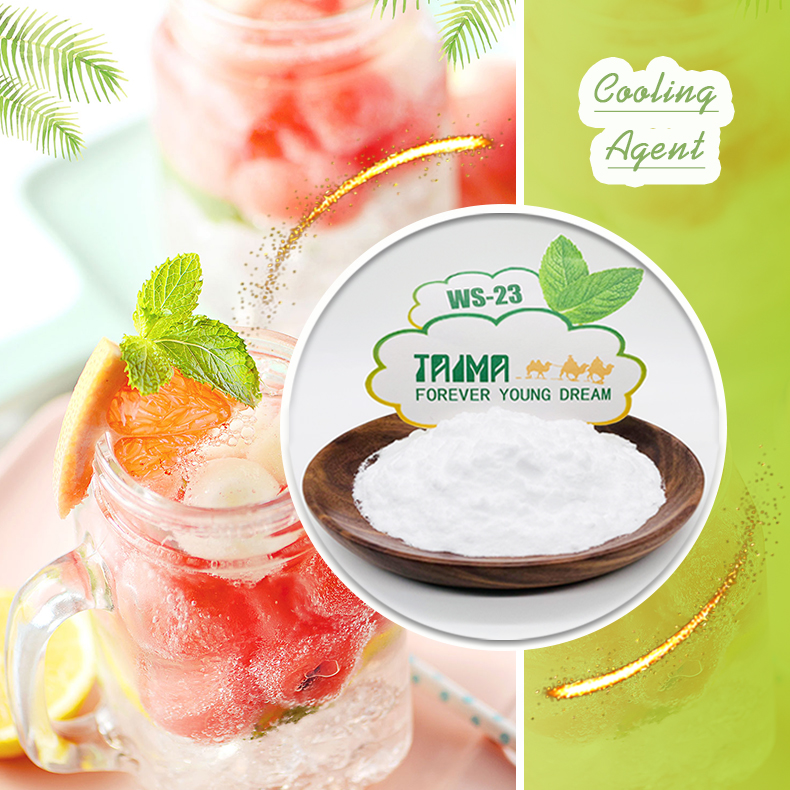
2. Powder cooling agents: WS-23, WS-3,WS-5, WS-27, WS-12...
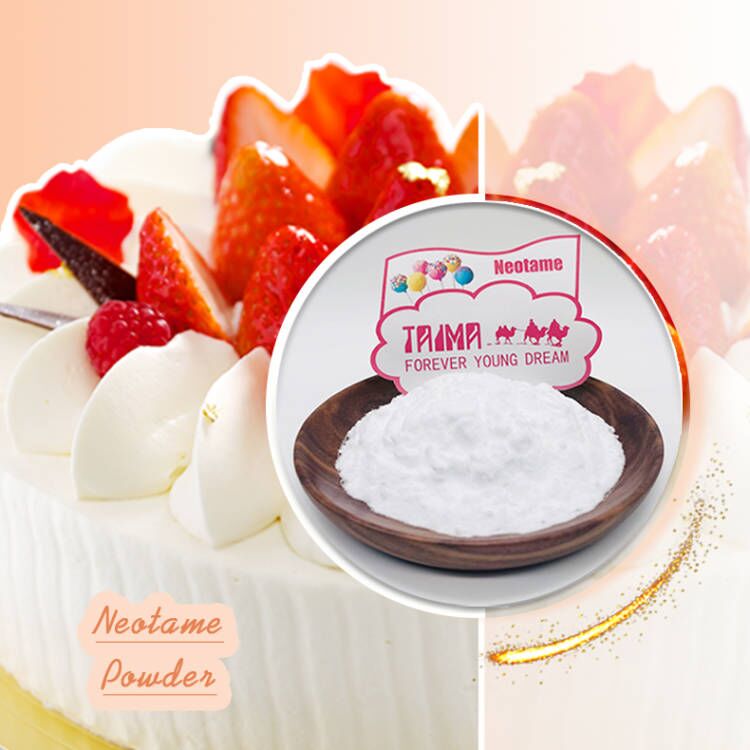
3. powder sweeteners: Neotame, Sucralose, Advantame...
4. Other additaves: Sour,Ethyl Malto other enhancer...

Roast Duck Concentrate Liquid Food Flavor Fish Meat Fragrance for Instant Food — quality concentrated flavoring manufactured by Xi’an Taima Bioengineering Co., Ltd. Professional-grade formula delivering rich taste and stable performance across food and beverage systems.
Formulation Advantages
- High-purity concentrate with potent aromatic strength
- Excellent solubility for seamless incorporation
- Stable in various pH and processing conditions
- Food grade quality meeting international standards
Application Scope
Suitable for beverages, dairy products, baked goods, confectionery, snacks and nutritional products. Adaptable to both water-phase and oil-phase formulations.
Global Supplier You Can Trust
Xi’an Taima operates an advanced flavor production facility with a 1000+ product portfolio. We offer competitive factory pricing, free samples, COA/TDS documentation and worldwide logistics. Inquiries welcomed from distributors and manufacturers.