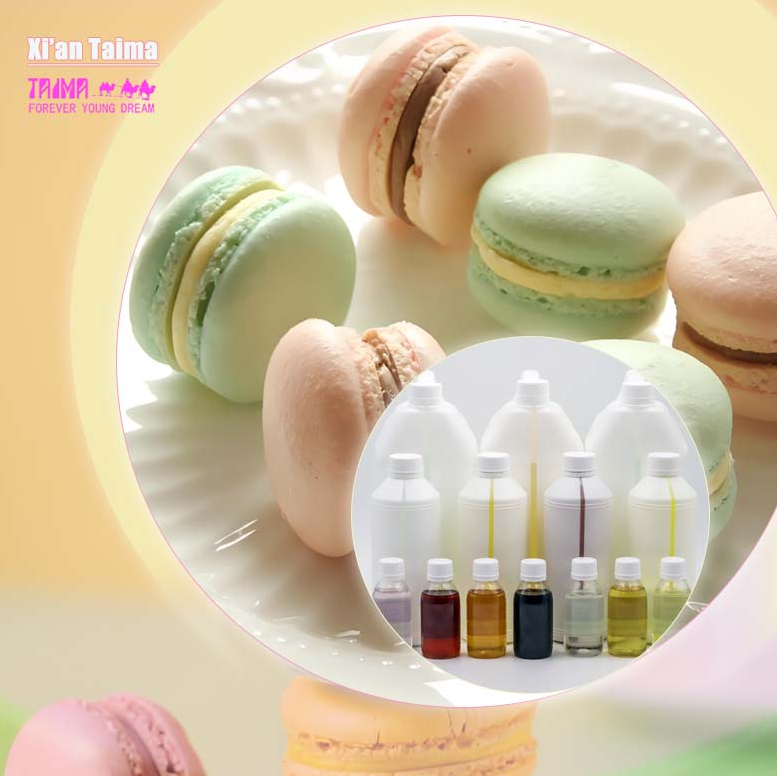
The role of Taima food flavoring agents

Study shows most dogs exposed to vape liquid are unharmed
They not only create attractive aromas to attract consumers, but also mask the unpleasant odors of raw materials and ensure the consistency of flavor across different batches of products.
The main functions of food flavorings include:
Adding fragrance and enhancing fragrance
Some foods do not have a distinct aroma or have a weak aroma (such as candies, sodas, jellies, etc.), and their attractive fragrance is mainly or even entirely provided by food flavorings. For example, mango flavoring is widely used in beverages, ice cream, and candies to simulate the rich tropical mango flavor.
Replenishing and Restoring Flavors
During the processing of food, the original aroma may be lost due to heating, storage, etc. Adding flavoring agents can effectively address this issue. For example, if canned sauces or baked pastries tend to lose their aroma during production, they need to be replenished with flavoring agents.
Stable product flavor
Natural raw materials are affected by factors such as the origin and climate, making the aroma difficult to be uniform. However, Tama Flavoring follows a fixed formula for blending, which can ensure the stability of the aroma in each batch of products. It is particularly suitable for large-scale production scenarios such as fruit beverages and dairy products.
Covering unpleasant odors
During food processing, foods may produce unpleasant odors such as fishy or astringent smells. Tama fragrance can cover these odors by blending specific ingredients (such as star anise and cinnamon-like spices used in meat products) to enhance the overall taste experience.
Enhancing Value and Stimulating Appetite
The unique flavor can enhance the market competitiveness of the product and stimulate consumers’ desire to purchase. At the same time, the aroma can stimulate saliva secretion and play a role in promoting appetite, especially in infant complementary foods or functional foods, where it has certain application value.
Realizing flavor standardization and cost control
In industrial production, such as in the manufacturing of meat powder, the flavor of raw meat may vary from batch to batch. Meat powder essence, as a “flavor module”, can precisely reproduce the core aromas (such as baked aroma, nut aroma), achieving standardized flavor output and reducing reliance on expensive natural raw materials.