
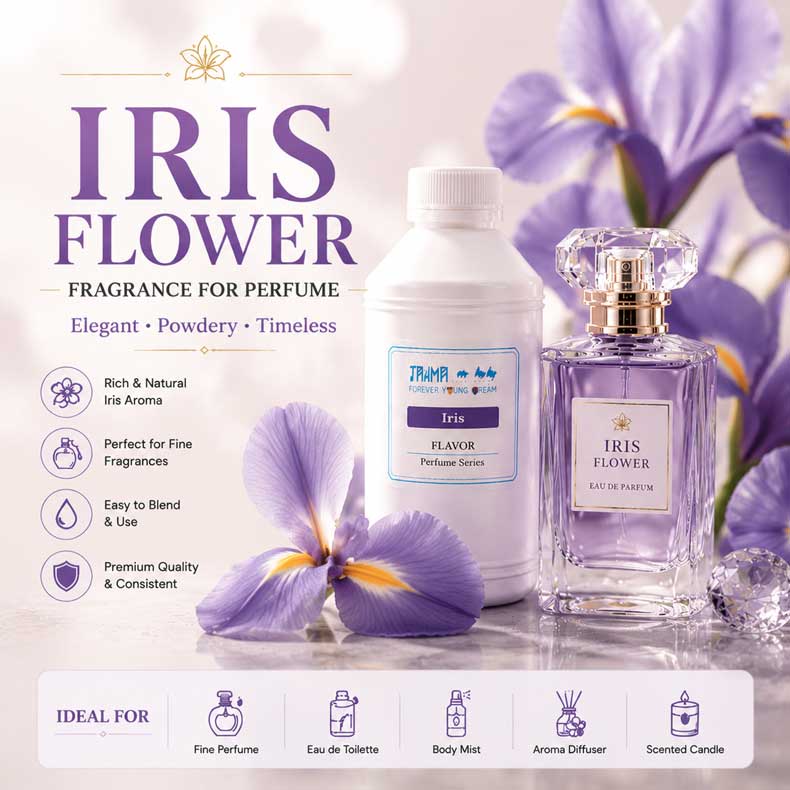
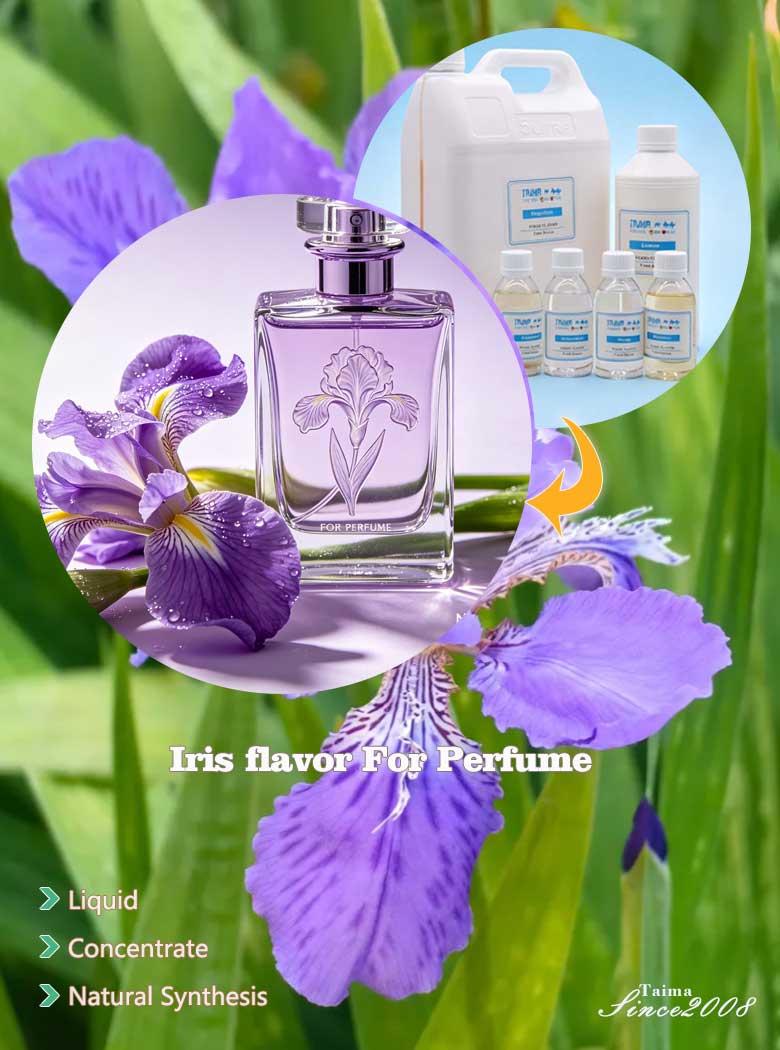
Taima concentrate iris fragrance liquid flavor for perfume
concentrate Food Grade,safe,Nature synthesis
Water-soluble fragrance
Oil-soluble essence;
Emulsified flavour
Powder aroma;
Paste flavor;
Detials of violet essence Flavor for perfume
Mixed fruit flavorings are one of the most commonly used types of flavorings in confectionery production, imparting a rich and natural blend of fruit aromas to candies
Suitable Flavoring Types and Dosage:
Iris is a highly valuable premium fragrance ingredient in the perfume industry, often referred to as the "Queen of Perfumes." The core roles of iris in perfumery:
1. Fixative and structural support: Iris is a classic fixative framework. It acts as a structural agent, enhancing the overall layering of the fragrance and preventing other floral notes (such as rose and jasmine) from fading, thus improving the longevity of the scent. Therefore, it is often used as the core fixative in high-end perfumes..
2. Creating a unique texture: With its signature powdery, slightly soapy, and cool-toned woody sweetness, and a smooth, velvety texture, iris can create a sophisticated "soft-focus matte" finish, giving the fragrance an intellectual and restrained elegance.
3. Expanding fragrance compatibility: It can add elegance to floral scents, enhance sophistication in woody/musky scents, and add depth to fruity scents. It is adaptable to a variety of fragrance styles, making it a versatile ingredient highly favored by perfumers.
III. Recommended proportions of violet extract in perfumes
- Parfum: 20%-40%
- EDP: 15%-20%
- EDT: 5%-15%
- EDC: 2%-5%
I. Daily Chemicals and Perfume Industry
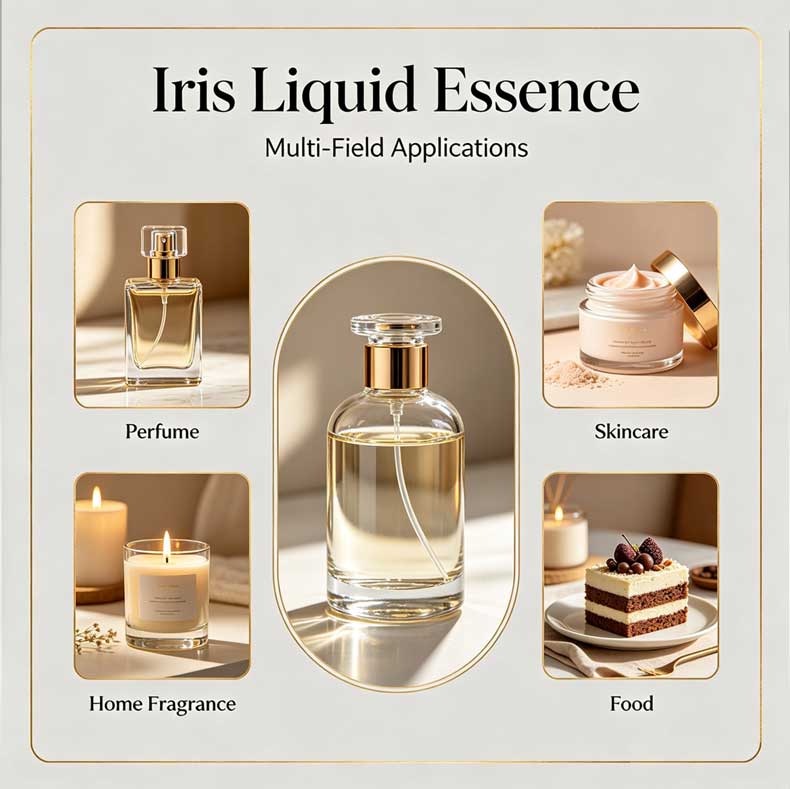
1. Perfume Products: It can be used as a main fragrance in violet-themed perfumes and colognes, or as a blending ingredient to enhance the clarity and sophistication of other fragrances. The maximum usage in a formula can reach 25%.
2. Personal Care Products: Shampoo, shower gel, soap, hair oil, hair lotion, and other personal care products.
3. Skincare and Makeup: Adding fragrance to toners, creams, lipsticks, and face powders.
4. Other Daily Chemical Products: Commonly used in air fresheners and other deodorizing products to neutralize indoor odors with a fresh scent.
II. Food Industry:
Primarily used in the formulation of fruit-scented edible flavorings such as raspberry, strawberry, cherry, pineapple, etc., added to candies, beverages, and baked goods to enhance the fruity flavor of the products.
Specifcation of Food Flavor
- Refractive index: 80-120
- Purity: 99%
- safaty healthy
- Composition: essence = Base + taste (fragrance/flavors)
- Addition ratio: 0.05%~0.3%
- Flavor type
1) Nature synthesis Flavor (Best-selling );
2) Natural extraction flavoring;
3) synthetic flavor.
Advantages Of Food Flavors:
I. Optimizing Food Flavor
1. High and Low Temperature Resistance: Frying, baking, and freezing do not affect the stability of the flavoring.
2. Imbuing Rich Flavors: Many processed foods have bland base flavors; adding food flavorings can create a variety of pleasant aromas (such as fruity or nutty flavors), satisfying consumers' diverse flavor preferences.
3. Compensating for Flavor Defects: Foods easily lose their natural aromas during processing, transportation, and storage. Flavorings can replenish and improve aromas, and also mask unpleasant odors generated during processing, enhancing overall quality.
4. Stabilizing Aroma Quality: Flavorings are formulated according to a uniform recipe, ensuring consistent aroma across batches and preventing fluctuations in the flavor of natural ingredients from affecting the finished product's taste.
II. Value to the Food Industry
1. Reducing Production Costs: Compared to directly using natural ingredients for flavoring, food flavorings are lower in cost, require very small amounts, are more suitable for large-scale industrial production, and can also solve the problem of seasonal shortages of some natural ingredients.
2. Facilitate Product Innovation: It can flexibly formulate complex flavors that are difficult to achieve with natural ingredients (such as mixed fruit flavors and trendy innovative flavors), helping companies develop new products and enhance product added value and market competitiveness.
3. Adapt to Special Processing Needs: Different dosage forms of flavorings (powder, water-soluble, oil-soluble, water-oil soluble, etc.) can be adapted to different processes such as baking and high-temperature sterilization, extending the aroma retention during the product's shelf life.
III. Safety Advantages of Compliant Use:
Strictly complying with the "National Food Safety Standard - Standard for the Use of Food Additives" (GB 2760-2024) ensures food safety and will not impose additional burdens on health.
Precautions for Use of viole flavoring
| (1) | Stir thoroughly after adding to ensure even distribution. |
| (2) | It is recommended to add it at the final stage of the production process, as high temperatures may cause some aroma loss. |
| (3) | After the finished product is made, seal and store at a low temperature to prevent aroma loss. |
| (4) | Matcha flavoring is a food additive and cannot be consumed directly; it can only be added to baking ingredients. |
Food flavor package
1.Shipment:
Door to Door service by FedEx/TNT/DHL
2.payment method:
PayPal, T/T, W/U; Alibaba; Bank transfer...
3.Time delivery:
3 days after we gentting payment;
4.Packing:
First,Fluorinated bottles/bags first;
Next packed by Chunky Aluminium foil bag;
Then in carton box;
Frequently Asked Questions
Everything you need to know about our food flavor solutions.
Contact Veivy for a Quote
Ready to enhance your product's taste? Get in touch today!
Contact on WhatsAppTaima supply Raw materials for more than since 2008:
1. Concentrate flavors: Tobacco flavors, Fruit flavors, Mint flavors, mixed flavors...for e-liquid vape juice.
2. Powder cooling agents: WS-23, WS-3,WS-5, WS-27, WS-12...
3. powder sweeteners: Neotame, Sucralose, Advantame...
4. Other additaves: Sour,Ethyl Malto other enhancer...